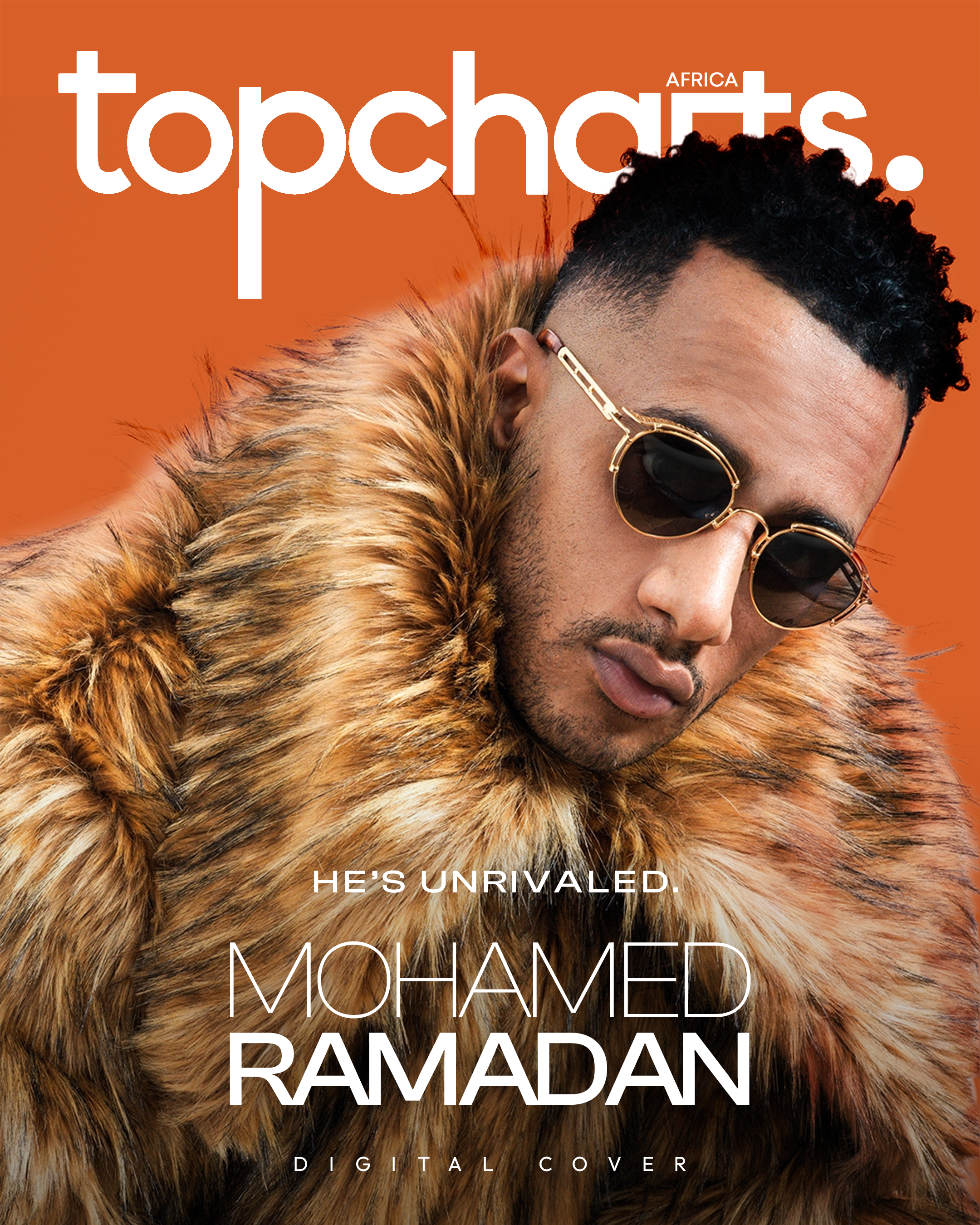
Mohamed Ramadan has built a career on presence. Not just in the roles he plays or the music he releases, but in the way he occupies space across everything he touches. Over the years, he’s moved between film, television and music with a consistency that has kept him firmly at the center of the conversation. There’s a clarity in how he operates, deliberate, controlled, and always aware of the moment.
With this cover, he becomes the first North African to front Top Charts Africa, a moment that feels both significant and long overdue. As the brand continues to grow globally, this cover reflects a wider conversation, one that connects different parts of Africa through culture, sound, and shared influence.
We had the opportunity to sit with Mohamed Ramadan and talk about the journey so far, the mindset behind his work, and what continues to drive him at this stage of his career.
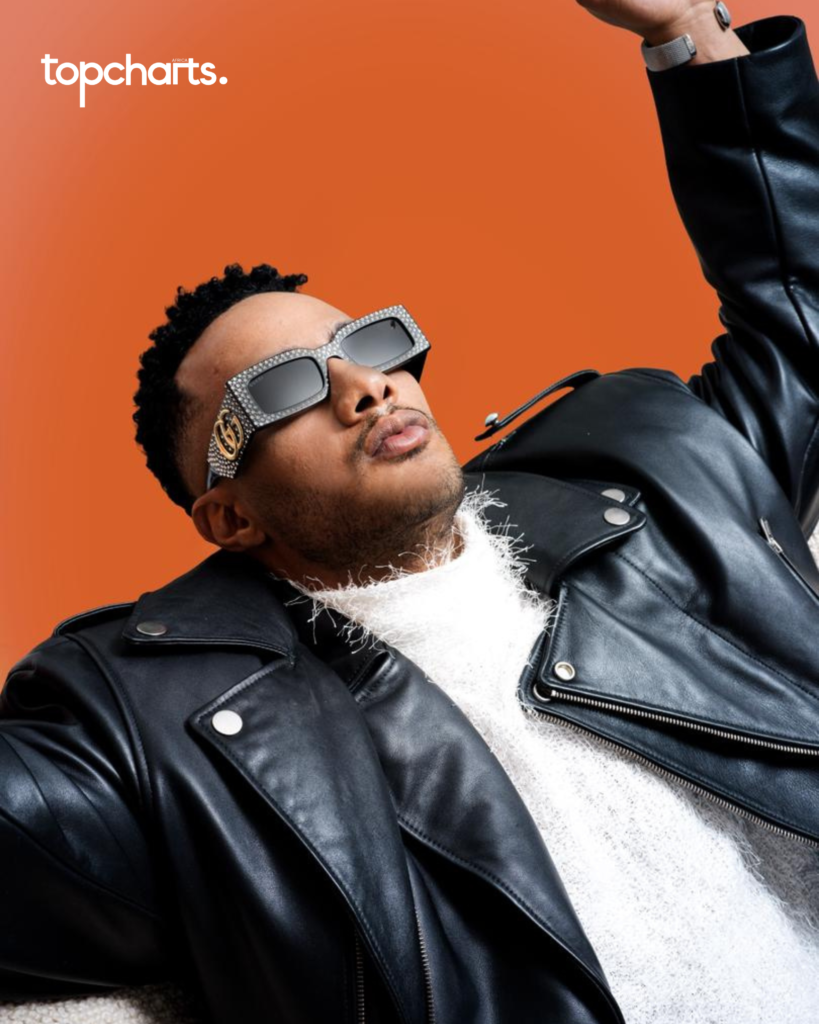
For Mohamed Ramadan, the idea that people already “know” him doesn’t really exist. “I don’t think my loyal fans really think this way,” he says, explaining that they’ve come to expect the unexpected from him. Rather than being defined by a specific sound or type of role, he’s built his career on refusing to stay in one place creatively, constantly moving, evolving, and bringing his audience along with him. It’s a relationship he sees as shared, one where discovery happens in real time. “They are my family, and I share everything with them… but they will always want to know more about me, and that’s us sharing the journey together.” At the center of it all is how he defines himself, not just by name or origin, but by purpose, describing himself as “Mohamed Ramadan, the Egyptian Arab African artist,” with a clear focus on having real influence in those regions and representing them to the world.
Growing up in Cairo and navigating the early stages of his career, he was surrounded by both struggle and examples of success that didn’t last, and that contrast stayed with him. “My background and the obstacles I faced… shaped the way I approach success,” he says. It made him pay attention, not just to what it takes to rise, but what it takes to stay there. For him, obstacles were never signals to stop, they were challenges to push through, sometimes forcefully. “Every obstacle I faced I saw as a challenge, and every closed door… I thought of as a door to be pushed or even kicked.” That mindset became the foundation of how he operates. Success, in his view, isn’t something handed over easily, it’s something earned through pressure and persistence. “To achieve something you have to suffer and work for it… your comfort zone is the trap.” More than anything, he ties that mentality to a broader identity, one rooted in resilience. “Your only limit is your mentality and what you believe… you have to keep going,” he says, framing it as part of a shared African experience where obstacles are expected, but so is the strength to push through them.
What keeps Mohamed Ramadan going isn’t something abstract, it’s people. Not in a vague sense, but in a very direct way. From the beginning, he’s seen his rise as something decided in real time by the audience. “It’s always the people who chose this… it’s them driving you,” he says. He points back to the early days of his acting career, where he showed up in different forms at once, small roles, supporting roles, lead roles, and watched what people responded to. “They chose me as the leading role… and we started the journey from there.” The same pattern repeated itself when he stepped into music. What began as a telecom campaign quickly turned into something bigger. “When it was released, the whole Middle East was listening… in cars, gyms, clubs,” he recalls. Again, the response was immediate, and again, it set the direction. For him, that feedback isn’t just validation, it’s responsibility. “It’s always the people who choose what’s dominating,” he says, and that choice is what continues to push him forward. “I will never let them down knowing this.”
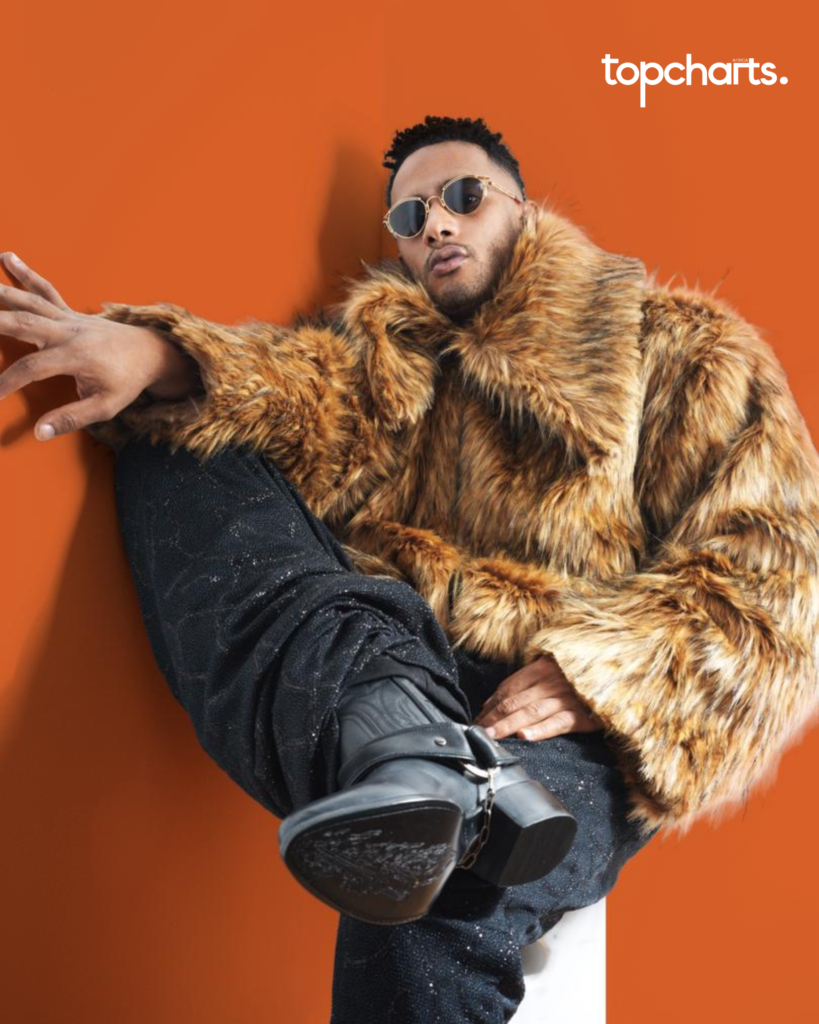
The idea of a disconnect between North Africa and the rest of the continent isn’t something he speaks about lightly, it’s something he takes personally. “I see this as a shame as an African artist,” he says. For him, being African has never been just about geography. “I never wanted to just consider myself African because I’m born in the African continent and that’s it… I always wanted to give more and more for Africa,” he explains, even if that meant stepping into unfamiliar territory or starting again in certain ways. That intention has shown up consistently in his work, from collaborations with artists across the continent to major moments tied to African culture. He points to performing at the opening of the Africa Cup of Nations in Côte d’Ivoire, as well as working alongside artists like Magic System (Côte d’Ivoire), Yemi Alade (Nigeria), Rema (Nigeria), Afro B (Ivory Coast), Skales (Nigeria), Franglish (Congo), Maître Gims (Congo), Soolking (Algeria), and Patoranking (Nigeria) as part of that effort. “I have a goal to change this disconnection,” he says, making it clear that it’s not just about visibility, but about building a stronger sense of connection across the continent, something he sees as a shared responsibility with his audience.
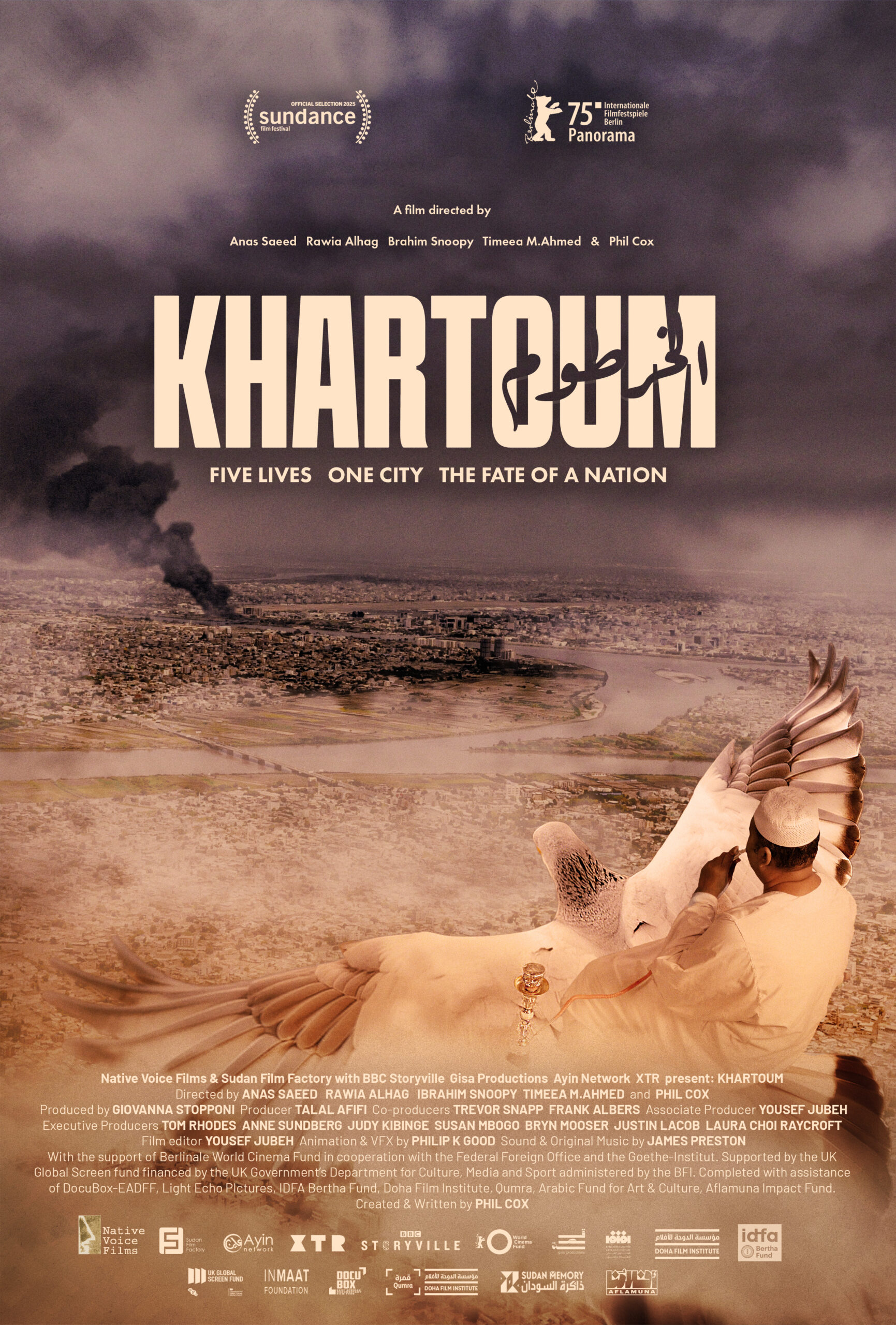
“All the collaborations had a creative impact on me,” Mohamed says while talking about his collaborations, pointing to the way each one has opened him up to new sounds, new ways of thinking, and new audiences. Whether working with artists like Rema, Future, or Gims, he sees each record as its own moment of connection, something mutual rather than one-sided. At the same time, there’s a clear intention behind it. He’s always thinking about how he represents where he comes from on a global stage, using those collaborations as a way to carry his region and his continent into new spaces. And while he hints at more to come, “I’m working on a lot of interesting collabs… it will be a surprise,” he says, there’s another layer that matters just as much to him: control. At this stage in his career, it’s less about chasing visibility and more about choosing what he wants to say. “I prefer to focus on which topics I want to highlight globally,” he explains, pointing to projects like Assad, directed by Mohamed Diab, as an example of that shift. The film, which tackles racism, reflects something personal, but also something bigger, a conscious decision to use his platform to speak on issues that extend beyond entertainment.
The way Mohamed Ramadan sees it, nothing exists in isolation. Acting, music, fashion, it’s all part of the same system. “I never put myself in one box or one category,” he says, and that idea runs through how he’s built his brand over time. Rather than treating each space as separate, he approaches them as connected parts of a larger whole, each one requiring its own level of focus and intention. “I see my brand as a lot of connected departments that I need to give them separately my 100%,” he explains. It’s a structured way of thinking about something that often looks effortless from the outside, a reminder that behind the image is a deliberate approach to how everything fits together. Whether it’s acting, singing, or fashion, the goal remains the same, to operate across all of it without being limited by any one lane.
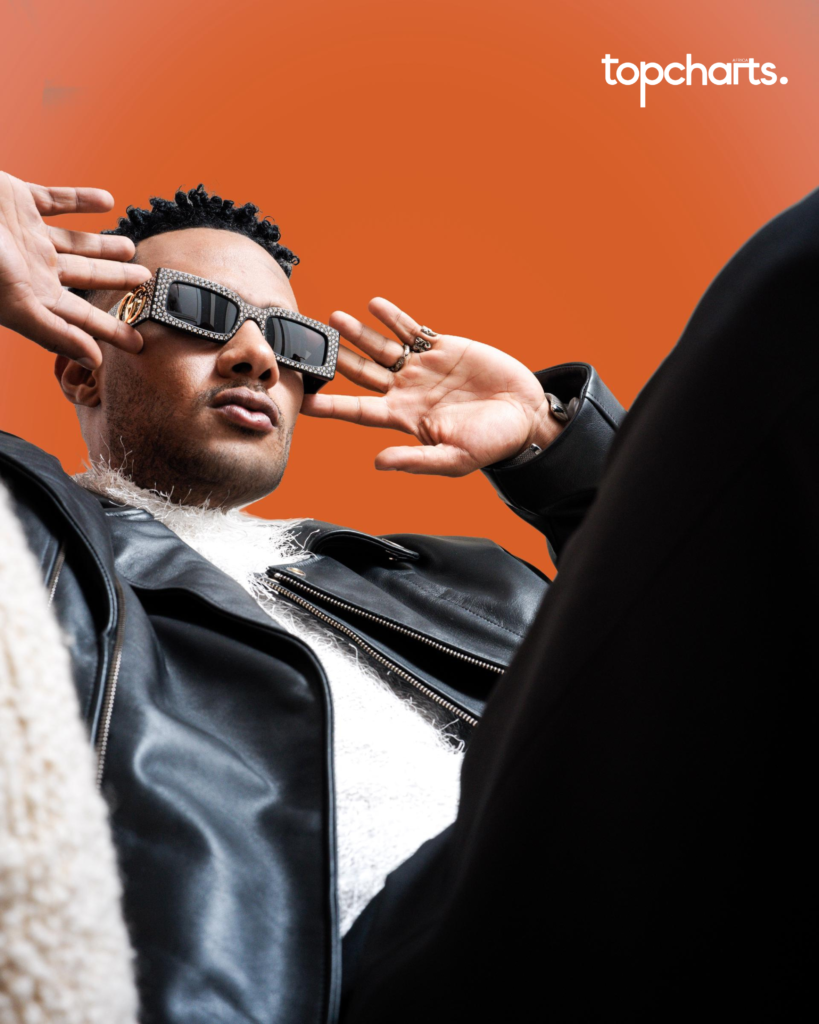
For all the conversation around how he’s perceived, he doesn’t see a major gap between image and reality, just a misunderstanding of how he chooses to operate. “People have this perspective of putting artists into boxes because it’s easier for them,” he says. In his case, that’s never really worked. His career doesn’t sit neatly in one category, and that lack of definition can sometimes be read as confusing to some people rather than intentional. “What I chose to do is not categorised,” he explains, pointing out that while that might be difficult for some to process, his audience understands it differently. They’ve been part of that direction from the start, pushing him to keep expanding rather than narrowing. At the same time, as everything around him grows, he remains deliberate about what stays constant. His connection to family and close friends is something he actively protects, not just emotionally, but as part of how he makes decisions. “I’m always discussing my steps and my career with my family to know their opinions,” he says, adding that even within his friendships, he’s intentional about who remains in his circle. As his world expands, that circle naturally evolves, often becoming more aligned with his work and environment, but the foundation stays the same, built on trust, familiarity, and a need to stay grounded regardless of scale.
Looking back, the vision was always there, even when the reality wasn’t. “My slogan from day one is ‘trust in God equals success,’” he says, a belief that grounded him long before there were any real indicators to support it. In his toughest moments, he still saw the bigger picture, still believed that what he was working toward would eventually take shape. At the same time, that belief hasn’t stayed static, it’s grown with him. “Of course it’s evolving during my career,” he explains, comparing it to moving through different stages, where each level pushes you to aim higher than the last. For him, the danger isn’t failure, it’s comfort. The moment you feel like you’ve done enough is when you risk losing momentum. And that’s something he’s never allowed himself to settle into.
“I want to be remembered for giving hope,” he says, speaking on the legacy he wants to leave. Specifically to Egyptian, Arab, and African young talents who might not always see a clear path to global recognition. His message is simple but important, that where you come from, the language you speak, or the culture you carry shouldn’t limit how far you can go. It’s a perspective shaped not just by his own journey, but by those who came before him. He points to Omar Sharif as someone who left a lasting impression, both through his work and through personal conversations that stayed with him. Those lessons, learned early and reinforced over time, continue to shape how he sees success today, not just as something to achieve, but as something that should open doors for others.
As for what comes next, he keeps it simple. “The next is unexpected.”
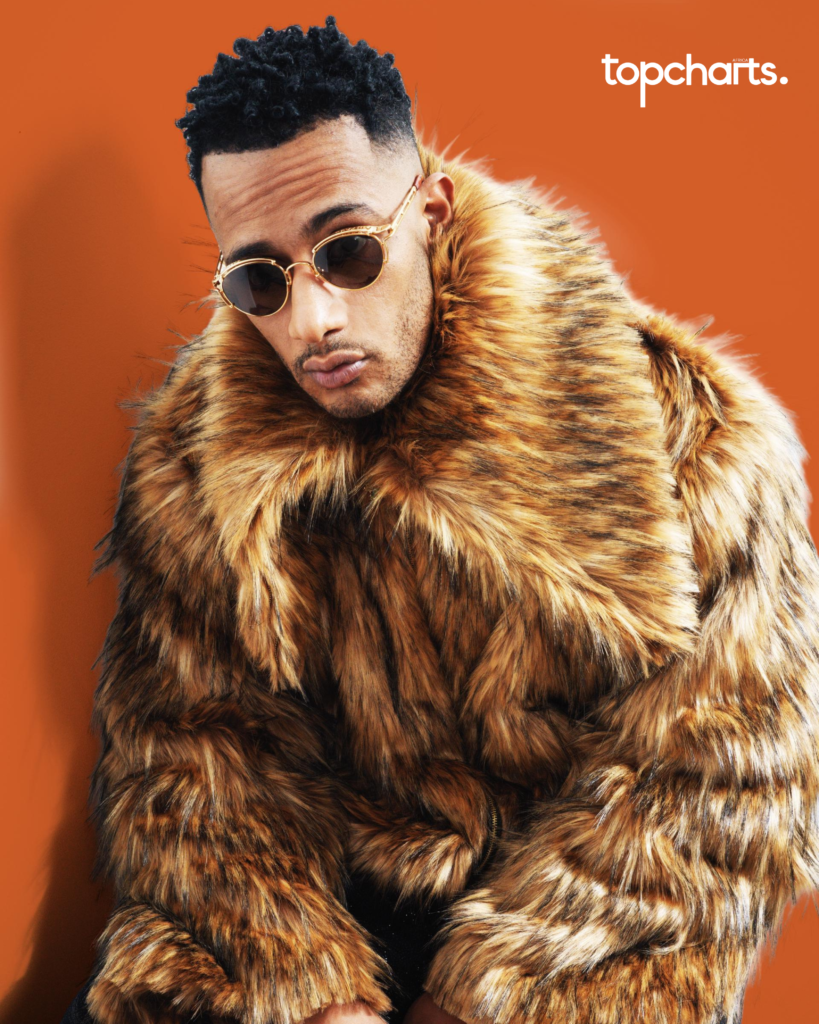
At this point, trying to define Mohamed Ramadan feels like missing the point entirely. He’s not interested in fitting into anything predictable, and honestly, that’s exactly why it works. Whether you see him as an actor, a musician, or something in between, he’s built a career that moves on its own terms, and more importantly, keeps people watching. The confidence, the scale, the consistency, it’s all very intentional, even when it looks effortless. And if there’s one thing that’s clear, it’s that he’s not slowing down or settling into anything comfortable anytime soon. With Mohamed Ramadan, you don’t really wait for what’s next… you just know it’s coming, and it’s probably going to catch you off guard.
Written by:
@saliumomoh
Cover Talent:
@mr1
Photographer:
@fabienmontique
Interview by:
@saliumomoh
Creative Director:
@kyojino
Stylist:
@juliette.ver
Cover design:
@_shayee__
Hair:
@hair_by_k
Makeup Artist:
@mlbeauty
Executive Production:
@Jayciaofficepr
Brands:
@sanoberparis, @renaissance.eyewear
Special Thanks:
@lsmprod