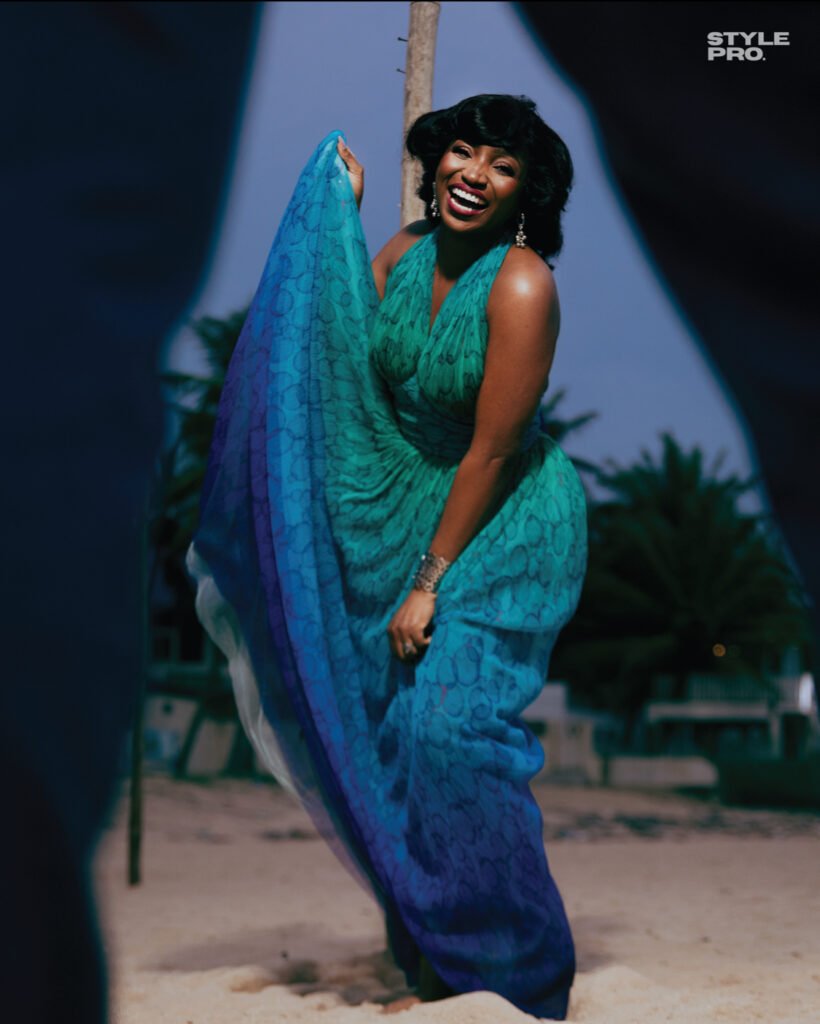

There are some people who arrive on set carrying the full weight of their reputation.
You notice it immediately. The entourage. The distance. The unspoken understanding that everyone in the room must orbit around them.
Omowumi Dada arrived differently.
On a cloudy morning in July 2025, our team gathered at Lobster Beach House in Epe for
what would become one of the most memorable cover shoots STYLEPRO has ever produced. The setting felt almost cinematic. The ocean stretched endlessly behind us, the sky hung low with clouds, and the wind moved through the property with the kind of rhythm that photographers dream about.
It should have been a difficult day. Beach shoots usually are.
The weather changes without warning. Timelines stretch. Hair, makeup, and styling
constantly battle the elements.
Yet from the moment Omowumi arrived, there was an ease to the day.
Not because everything went perfectly, but because her prescence she made it easier.
For the first look, she stepped into a Banke Kuku dress that moved beautifully against the muted backdrop of the beach. Later came a second look styled by David Yomo, complete with a shimmering headpiece that caught whatever light the clouds were willing to give us.
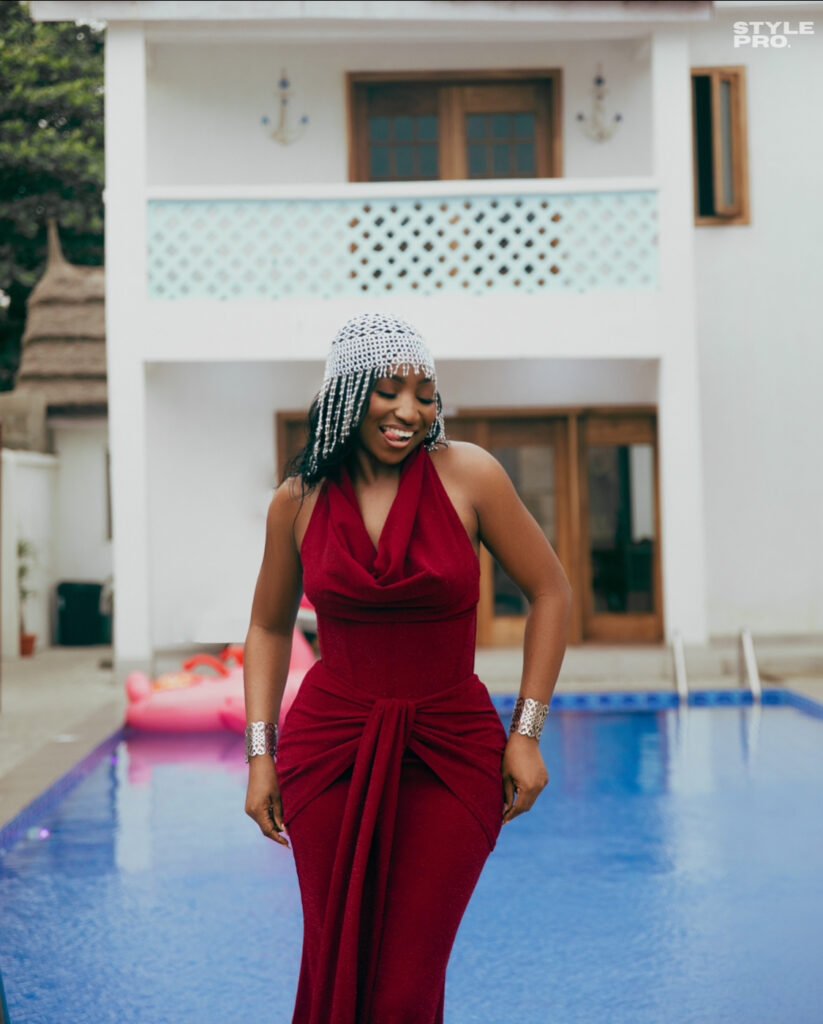
The images were striking. Elegant without feeling distant. Soft without losing presence.
But what stayed with me had very little to do with the clothes.
It was the way she treated people.
Throughout the day, she moved through the set with a warmth that never felt performative.
She listened attentively when directions were given. She obliged every creative suggestion, no matter how experimental. She stayed long after many people in her position would have found a reason to leave.
More importantly, she made people feel comfortable; a quality difficult to make up.
In an industry built on visibility, authenticity has become surprisingly rare. Yet Omowumi
seemed completely uninterested in maintaining a performance between takes. She laughed easily. Spoke kindly. Checked in with people. There was no visible separation
between the actress and the person. It is a small story, but often, the smallest stories reveal the most.

When people describe Omowumi Dada as “Nollywood’s Sweetheart,” it is tempting to
assume they are referring to popularity. The successful films. The respected performances. The growing reputation she has built across stage and screen.
After spending time with her, I suspect they are talking about something else entirely.
They are talking about how she makes people feel.
When we spoke later, she described herself as a woman of faith, purpose, and passion. She spoke about love repeatedly. Love for God. Love for people. Love for storytelling.
What stood out wasn’t the way she spoke about her career. It was the way she spoke about what her career could do for other people.
“I want people to know that everything I do is rooted in love,” she told me.
The statement sounds simple enough until you realise how consistently it appears
throughout her life and career.
She does not describe success in terms of fame. She describes it in terms of service.
She does not speak about legacy as something measured by awards or recognition. She speaks about it as the lives touched, the stories told, and the light left behind.
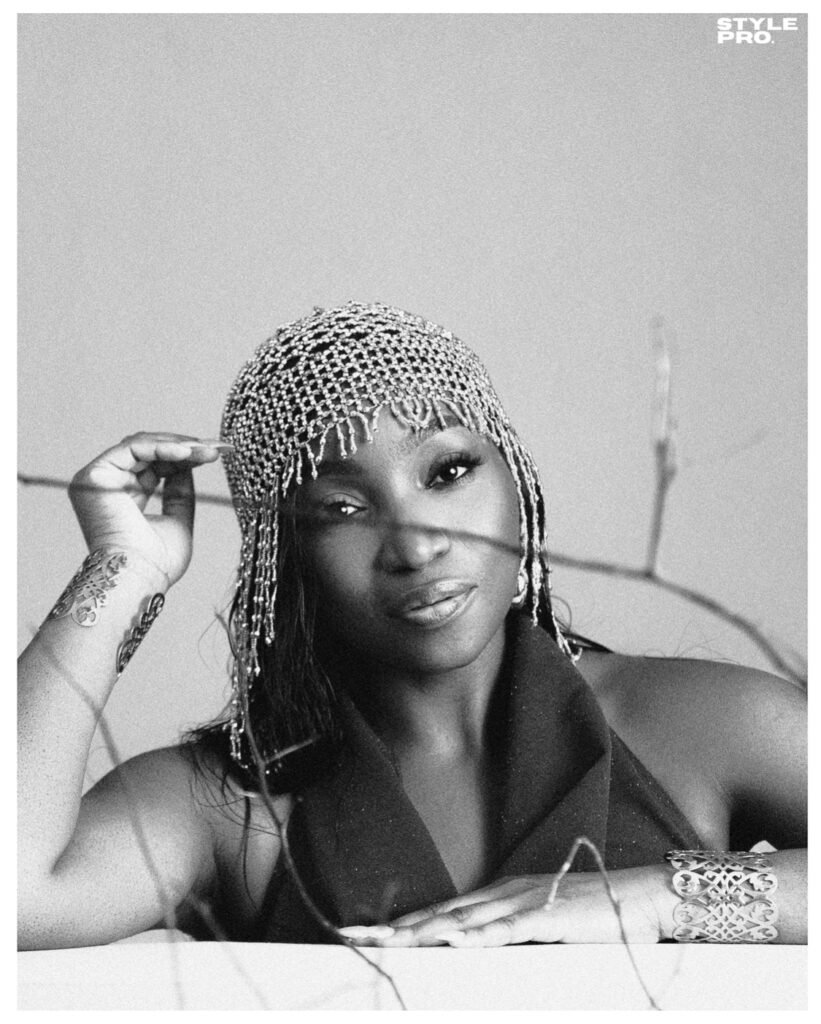
Again and again, the conversation returned to purpose.
The impression she left wasn’t one of ambition alone. There was a sense of purpose behind it all, a quiet clarity about who she was and why she does what she does.
Like many actors, Omowumi’s journey has not been free of doubt. She speaks candidly
about rejection, uncertainty, and the moments where the destination felt impossibly far away.
“There were times when I questioned myself,” she admits.
There were seasons where the work felt harder than the dream itself.
What carried her through, she says, was faith.
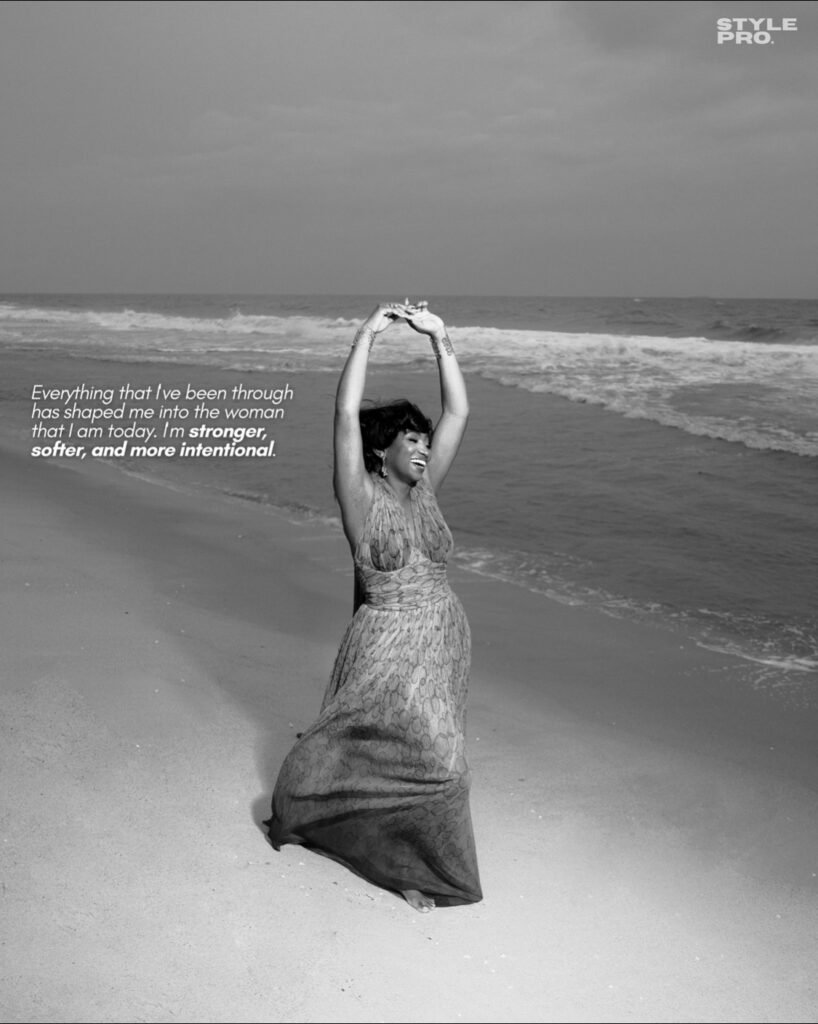
Faith in God.
Faith in the process.
Faith in the people who believed in her before the rest of the world did.
She speaks about her family with immense gratitude, describing them as people who saw greatness in her long before she could recognise it herself. Even now, despite the success, she seems reluctant to describe herself as someone who has arrived.
“I’m still becoming,” she says.
It may be the most revealing thing she tells me all day.
Because for all the accolades, all the recognition, and all the admiration she receives, Omowumi remains surprisingly uninterested in presenting herself as a finished product.
In fact, one of the biggest misconceptions people have about her is that she enjoys
constant attention.
The reality is almost the opposite.
“I’m a homebody at heart,” she laughs.
She loves quiet spaces. Deep conversations. Meaningful moments with family and close
friends.
She can spend an entire week at home and be perfectly happy.
There is something refreshing about that honesty.
Especially in an industry where visibility is often mistaken for value.
A younger version of herself, she admits, may have felt pressure to show up in a way that people expected.
Not anymore.

Today, she seems far more interested in protecting her peace than performing for an
audience.
And perhaps that is what makes her so compelling.
It is that she has managed to preserve something increasingly rare.
Softness. Kindness. A genuine belief in people.
The sort of qualities that cannot be manufactured by good publicity and cannot be captured by cinematography.
Looking back on that day in Epe, it is difficult to imagine a more fitting description. For all
the admiration surrounding her career, Omowumi Dada still speaks like someone
approaching her work with curiosity rather than certainty. The performances may have
made her a star, but it is the woman behind them that people seem to remember.